

Moving Into a NSW Rental With a Pet: The 7-Day Clock Starts When You Sign
If you are moving into a new NSW rental with a pet, give the landlord the pet application form within 7 days of entering into the tenancy agreement, not of moving in, and the pet can stay while the landlord considers it; miss that window and you need the landlord's consent before the pet moves in.
Lodge the pet form on the day you sign the lease. If you do, the landlord's answer, or approval by silence, is due within 21 days of you handing it over. Leave it to the last day of the window and that answer can land up to 28 days after signing. That figure is our estimate: the 7-day window plus the full 21-day reply period, both set out on the NSW Government's pets in rentals page. By then the truck may have been and gone.
The rule behind it is new. From 2 October 2026, tenants moving into a new rental with a pet can apply for consent within 7 days after entering into the tenancy agreement and keep the pet at the property while the request is considered. Our advice at Sunnyholt Removals is simple: treat the pet form as part of signing the lease, not part of moving day.
The pet timeline, from signing the lease to an answer
Sign the tenancy agreement
Lodge the pet form here: within 7 days after entering the agreement, pet can stay while you wait
Form given to landlord or agent
Landlord's reply period: no response within 21 days = approved without conditions
The clock starts when you enter into the agreement. Moving day has nothing to do with it. Most people sign the lease and book the truck in the same week, which is exactly when the form gets forgotten.
Here is how the pieces line up:
- Before or at signing: you can ask for consent before signing the tenancy agreement, using the application form, or after entering into the agreement.
- Within 7 days of signing: lodge the form and the pet can stay while you wait.
- Within 21 days of the form reaching the landlord: the landlord has 21 days to respond.
- Moving day: whenever suits you. It does not restart or extend anything.
Can I move into a rental with my pet in NSW?
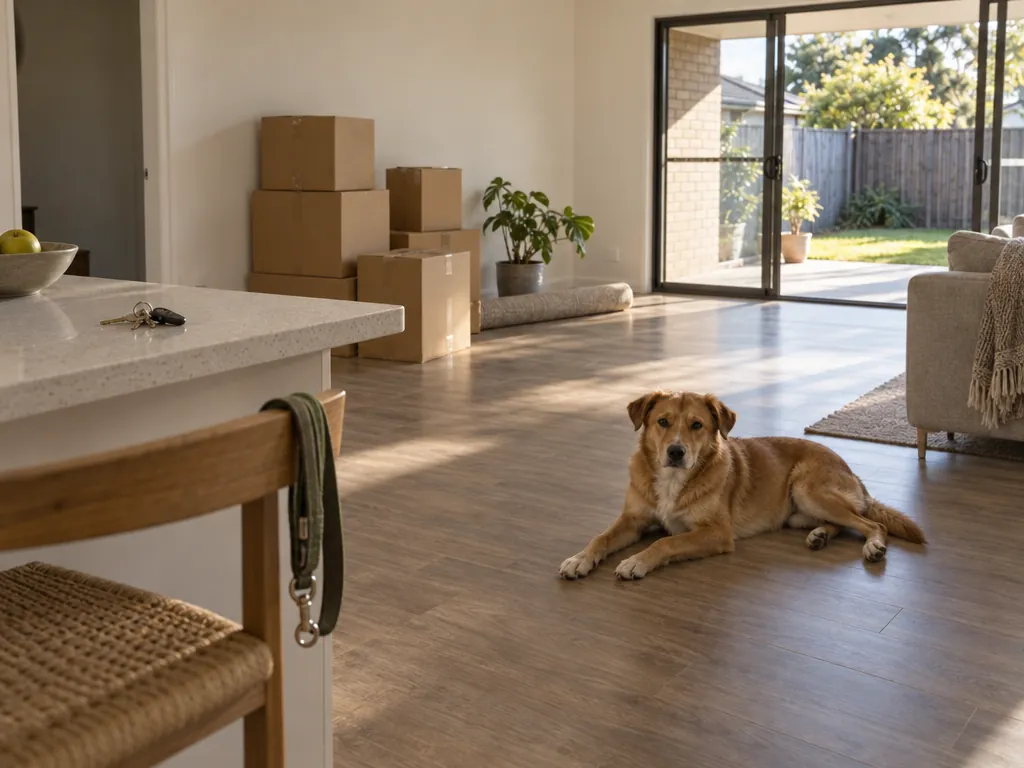
Yes, if you get the form in on time or already have the landlord's consent. The 7 days run from entering into the tenancy agreement. That is usually the day you sign, not the day you move in. If you do not apply within 7 days of the agreement, you must have the landlord's consent before keeping the pet at the property.
So a lease signed on a Monday with a move ten days later means the window has shut before the pet ever arrives. That is fine, as long as the form went in during those first 7 days.
A few other rules come with the pet, whatever the landlord says:
- In NSW, dogs and cats must be microchipped and registered.
- Native animals or reptiles may need a licence, and some animals are restricted or prohibited.
- Assistance animals do not need consent, but tell the landlord so the animal is not mistaken for an unapproved pet.
How do I apply, and how long does the landlord have to reply?
Applying within 7 days is not approval: it lets the pet stay while you wait.
Use the standard pet application form (section A). Every tenant listed on the agreement must sign it, and it goes to the landlord or agent. Keep a copy. If there is ever a question about dates, that copy is your record of when you applied.
Applying within 7 days is not approval: it only lets the pet stay while you wait for the landlord's written response.
From there, the landlord has 21 days. If there is no response within 21 days of the form being given to them, the pet is automatically approved without conditions. That only works if the form was actually given, which is another reason to keep a copy.
If the landlord does reply, two rules apply. A refusal must give reasons and explain why each reason applies, and landlords can set only reasonable conditions.
What can a landlord refuse a pet for?
| Ground for refusal | Where the official guidance limits it |
|---|---|
| Unreasonable number of animals | Four or fewer is reasonable, so only applies above four |
| Fencing not appropriate | Cannot be used if the pet is in an enclosure (hutch, aviary, tank) or kept indoors and only taken out under physical control, such as on a leash or in a carrier |
| Not enough open space | Cannot be used for a cat in an apartment that can use a litter box, or a dog walked off the property for exercise |
| Cannot be kept humanely | No limit stated |
| Excessive damage | Means highly probable damage above the bond amount |
| Not allowed under other laws | For example council limits |
| Landlord lives in the same home | No limit stated |
| Tenant did not agree to reasonable conditions | Conditions must be reasonable |
| Every refusal must give reasons and explain why each applies | |
| Purpose-built student accommodation: landlord can refuse without a specific reason | |
The list is narrower than many renters expect. Since an earlier stage of the reforms, from 19 May 2025 a landlord can refuse a pet request only for certain reasons. Grounds for refusal include:
- an unreasonable number of animals, where four or fewer is reasonable, so this ground only applies above four
- fencing that is not appropriate
- not enough open space
- the animal cannot be kept humanely
- the animal will cause excessive damage, meaning highly probable damage above the bond amount
- the animal is not allowed under other laws, such as council limits
- the landlord lives in the same home
- the tenant did not agree to reasonable conditions
The official examples show where some of these stop applying:
- A hutch, aviary or tank: fencing cannot be the reason if the pet will be in an enclosure (hutch, aviary, tank) or kept indoors and only taken outside under physical control, such as on a leash or in a carrier.
- A cat in a unit: a cat in an apartment cannot be refused for lack of open space if it can use a litter box.
- A dog without a big yard: a dog that is walked off the property for exercise cannot be refused for lack of exercise space.
One exception to all of this: in purpose-built student accommodation, the landlord can refuse a pet without giving a specific reason.
What if the landlord says no to my pet?
Pet may stay 21 days after you receive the response
A further 21 days
Line up somewhere for the pet to go, and a moving date to match
You do not have to remove the pet the moment a refusal arrives. You can keep it for 21 days after receiving the response. If you apply to the Tribunal within those 21 days, the pet can stay while the application is considered. If the Tribunal dismisses it or you withdraw, you have a further 21 days.
Notice that the clock runs from when you receive the refusal, not from when you applied. That date is the one to plan around.
We cannot tell you how a Tribunal application will go, and this is not legal advice. What we can say is that a fallback makes those 21 days calmer: a friend, family member or boarding arrangement that could take the pet, and a rough idea of when you would move it. If the answer is to move house again, that is a move worth booking early rather than in the last week.
Renting in a strata building: two approvals, not one
Landlord's consent: pet application form, 21-day reply period
Owners corporation approval under the by-laws (if required)
A by-law that bans all pets is not valid.
Units and townhouses in a strata scheme can add a second step. Tenants may also need separate approval from the owners corporation under the by-laws, in addition to the landlord's consent. A by-law that bans all pets is not valid.
Run the two side by side. The official advice is to submit both applications as soon as possible, so ask the agent for the by-laws before you sign.
What to sort before moving day
Most of this takes ten minutes each, and doing it before the truck is booked means nothing is left hanging on the day:
- Get the pet form signed by every tenant and given to the landlord or agent within 7 days of signing. Keep a copy.
- Check the strata by-laws and lodge an owners corporation application if one is needed.
- Check your council's animal limits, because a pet not allowed under other laws such as council limits is a ground for refusal.
- Confirm your dog or cat is microchipped and registered.
- Tell the landlord about an assistance animal.
- Update the pet's address on the NSW Pet Registry (more below).
If you are still lining up the truck, our guide to choosing a removalist in Blacktown covers the quote, contract and insurance checks for the same week.
Update your pet's address when you move
Cat and dog owners must keep their details in the NSW Pet Registry up to date. That includes short stays. If your pet lives at another location, even temporarily, you must update its location to stay compliant.
So if the dog spends moving week at your parents' place, that counts. Update the location when it goes and again when it comes home.
No online access? You can notify council with the C3C change of details form within 14 days of a change.
On moving day, keep the pet clear of the truck
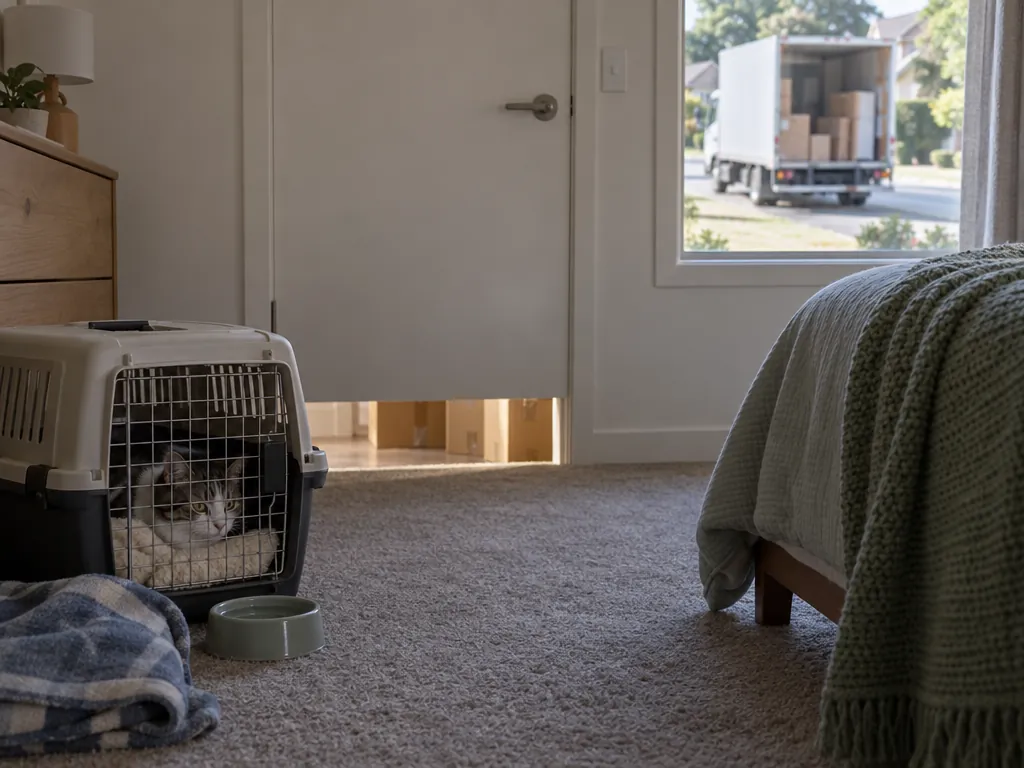
Moving day is loud, busy and full of open doors. Put the pet in a quiet room with the door shut, or in a carrier, before the truck arrives. Stick a note on the door so nobody opens it by mistake. Keep the pet away from the ramp and the front gate until the last box is in, and settle it into one room at the new place before the furniture starts coming through.
Every pet deadline in one place
- Window to apply and keep the pet while waiting: within 7 days after entering the tenancy agreement
- Landlord response time: 21 days (silence = approved without conditions)
- Pet may stay after a refusal: 21 days, then a further 21 days if a Tribunal application is dismissed or withdrawn
- Number of animals treated as reasonable: four or fewer
- Pet Registry paper change-of-details form (C3C): within 14 days of a change
Five numbers carry most of this:
- Apply within 7 days after entering the tenancy agreement to keep the pet while you wait.
- The landlord has 21 days to respond, and silence means approved without conditions.
- After a refusal, the pet may stay 21 days, then a further 21 days if a Tribunal application is dismissed or withdrawn.
- Four or fewer animals is treated as a reasonable number.
- The paper C3C form goes to council within 14 days of a change.
Book the move once the pet form is in
Sign, lodge the form, then book the truck. In that order, the pet paperwork is already moving before you start packing. When the form is in and you have a date in mind, ask Sunnyholt Removals for a quote and tell us about the pet, so moving day can be planned around a quiet room or a carrier from the start.
Sources
- https://www.nsw.gov.au/departments-and-agencies/fair-trading/news/changes-to-rental-laws
- https://www.nsw.gov.au/housing-and-construction/rules/pets-rentals
- https://www.olg.nsw.gov.au/pets/nsw-pet-registry/update-your-details-nsw-pet-registry
Pictures in this guide are illustrations, not photos of our jobs.